

Most cargo bike sourcing problems don’t happen during negotiation.
They happen quietly after the order is placed-when you miss out the cargo bike production management.
At that stage, many buyers step back and wait until close to the agreed delivery date before checking progress. By then, the window to correct mistakes is already closed. What could have been a small adjustment early in production turns into a costly compromise in quality, delay, or both.
If you’ve done your work properly before placing the order, you should already understand the general structure of an OEM or ODM project. Production is not a black box — it follows a sequence of interdependent steps. (We will break down these workflows in detail in a dedicated guide on OEM vs ODM cargo bike production processes.)
The key is to stay inside that process, not outside waiting for the result.
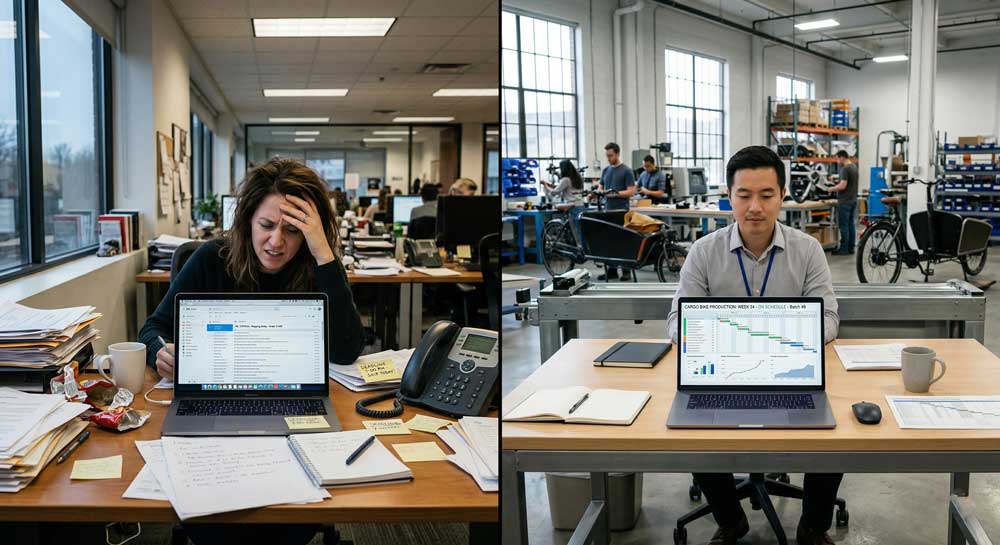
1. Production Does Not Fail at the End — It Drifts from the Beginning
A common misconception is that production issues appear suddenly near shipment. In reality, most problems begin much earlier, when small deviations go unnoticed.
That is why asking for updates a few days before shipment is ineffective. At that point, even if you discover an issue, the cost of correction is often too high. The supplier may push to ship anyway, and you are forced to choose between delay and compromise.
Effective production management starts by mapping the process. You should request a clear production timeline from the factory/vendor, not just a delivery date. This timeline should include key stages such as frame production, surface treatment, painting, assembly, and final inspection.
Without this visibility, you are not managing production — you are reacting to it.
2. The Timeline Is Your Only Real Control Tool
A well-defined timeline when you manage cargo bike production does more than show progress. It reveals risk.
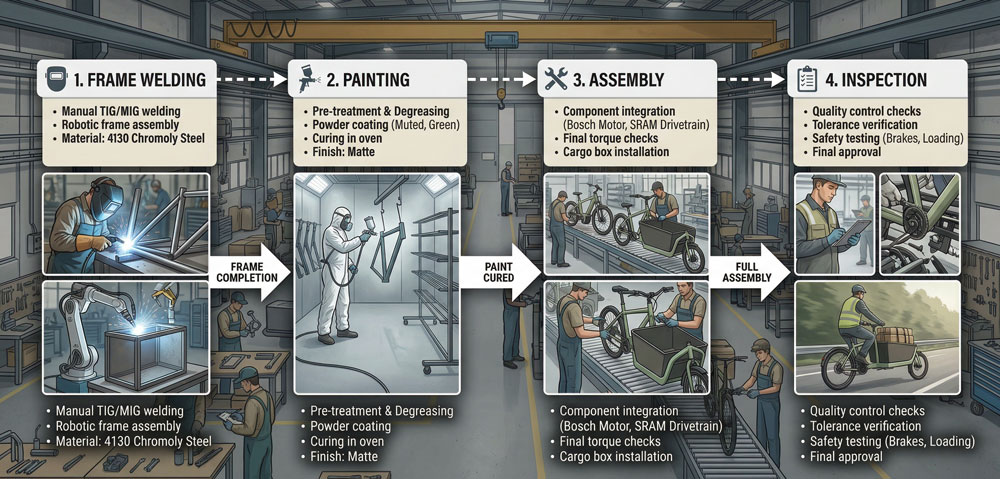
For example, frame production is often the first critical milestone. If the supplier has its own frame workshop, they can usually adjust quickly when issues arise. But if the factory outsources frames to a third-party supplier, the situation changes significantly.
In those cases, quality consistency becomes harder to guarantee, and any rework introduces major delays. This is one of the most common hidden causes behind postponed shipments. The problem is not the final assembly — it is the dependency on external processes that are outside the factory’s direct control.
This is also why factory structure, which you should have verified during How to Audit a Cargo Bike Factory, continues to matter during production.
3. Welding Quality Is Not Just Aesthetic — It Reflects Process Control
One detail that is often overlooked by buyers is welding.
At first glance, welding style may seem like a cosmetic choice. In reality, it reflects both technical capability and internal communication. If you specified smooth welding but receive fish-scale welding instead, the issue is not just visual — it indicates that requirements were either not understood or not properly transmitted inside the factory.
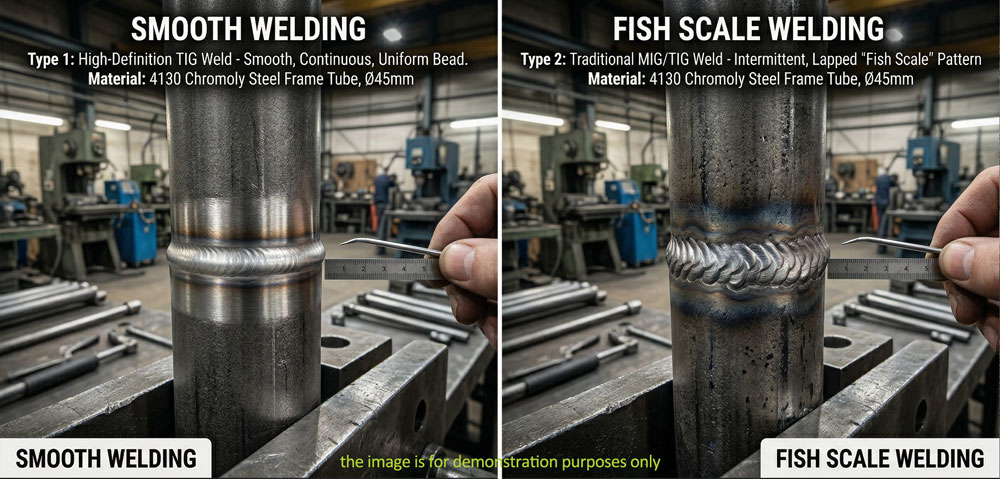
Different factories also produce very different welding consistency levels. Some maintain uniformity across batches, while others show variation depending on workers or production pressure.
Catching this early is critical. Once frames move to the next stage, corrections become significantly more difficult. This is why frame inspection should happen before painting, not after.
4. Painting Is Where Small Deviations Become Expensive Mistakes
After welding, painting becomes the next critical control point.
Color deviation is one of the most underestimated risks in cargo bike production. A slight mismatch between the approved sample and the final painted frame may seem minor in the factory, but it can become a serious issue in the market, especially for brands that rely on visual consistency.
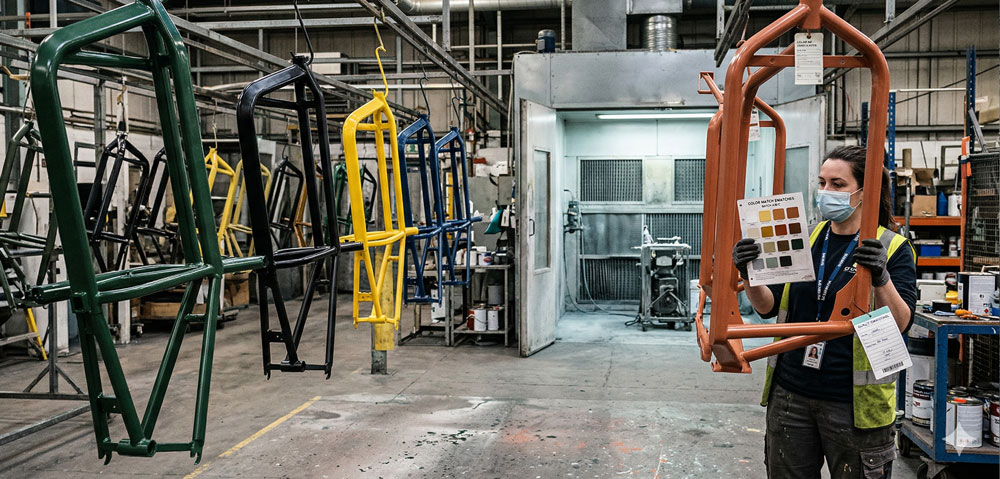
Once painting is completed, correcting color differences is costly and time-consuming. Repainting affects schedule, cost, and sometimes even surface quality.
This is why color verification must happen immediately after painting, not at the end of production. The supplier should provide clear visual confirmation, ideally compared directly with the approved sample or color code.
If the deviation is beyond acceptable tolerance, the decision must be made early: accept, rework, or adjust expectations.
5. Rushing the Timeline Always Comes at a Cost
There is a natural tendency to push for faster delivery, especially when shipment schedules are tight. However, aggressive deadlines often create unintended consequences.
When suppliers feel that time is the only priority, quality becomes negotiable. Not because they intend to deliver poor products, but because they are forced to make trade-offs to meet expectations.
Most factories do not want one-time transactions. But production pressure changes behavior. If the deadline is unrealistic, the focus shifts from “doing it right” to “getting it done.”
This is why experienced buyers avoid setting overly rigid deadlines. Instead, they manage timelines dynamically, balancing progress with quality at each stage.
6. Internal Quality Reports Matter More Than Final Inspection
Another key mistake is relying solely on pre-shipment inspection.
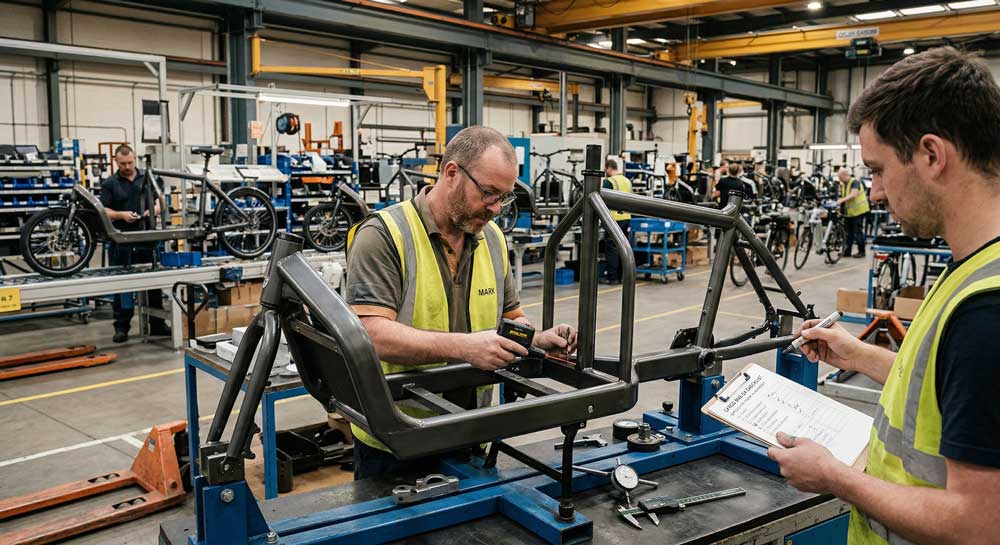
By the time final inspection happens, most quality outcomes are already determined. What matters more is how quality is controlled during production.
You should request internal quality reports at different stages, especially after key milestones such as frame completion and painting. These reports provide insight into how the factory monitors its own processes, not just how it presents the final result.
Factories with mature systems will have structured documentation. Others may struggle to provide consistent records, which is itself a signal of risk.
Understanding product structure also helps here. If you are familiar with how different components interact, as explained in Cargo Bike Anatomy: A Complete Guide to Parts and Types, you can better interpret where issues are likely to originate.
7. Outsourcing Chains Are the Hidden Risk Behind Many Delays
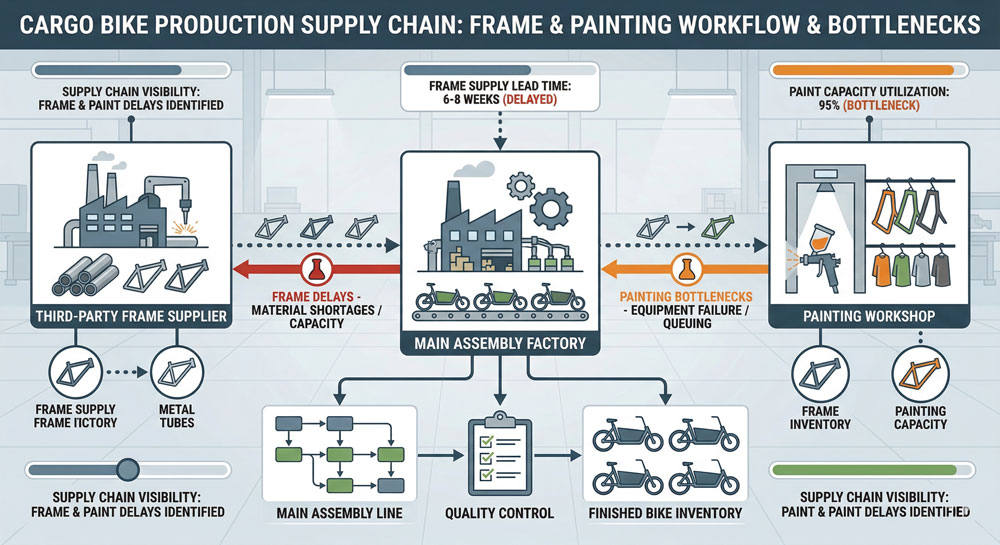
Many cargo bike factories are not fully integrated manufacturers. They are assembly-driven operations that rely on a network of suppliers.
This structure is not inherently negative, but it introduces complexity. Every additional supplier adds a dependency, and every dependency adds risk.
Frame production and painting are the two most critical outsourced processes. If either is delayed or requires rework, the entire production schedule shifts. This is why verifying whether a supplier has in-house capabilities is not just part of factory auditing — it directly affects production reliability.
If you are comparing different Cargo Bike Brands or evaluating suppliers across regions, this structural difference often explains variations in delivery performance.
8. Production Management Is About Staying Close to the Process
Managing production does not mean controlling every detail. It means staying close enough to detect deviations early.
That requires understanding the sequence of production, maintaining visibility at key stages, and communicating based on actual process status rather than assumptions.
It also requires discipline. Checking only at the end is easy. Staying engaged throughout the process is what prevents problems.
For buyers who treat production as an active phase rather than a waiting period, the difference in outcomes is significant. Delays are reduced, quality becomes more consistent, and supplier relationships become more predictable.
9. From Order to Delivery: Where Execution Defines Everything
Sourcing cargo bikes is often described as a sequence: negotiation, audit, production, delivery.
But in practice, production is where everything is decided.
The agreements you negotiated and the capabilities you verified only matter if they are executed correctly. And execution does not happen automatically — it requires continuous alignment.
If you want a structured way to align expectations with technical details, resources like How to Read Cargo Bike Specification Sheet? A Practical Guide help bridge that gap between agreement and production reality.
❓ People Also Ask (PAA)
When should I start checking production after placing an order?
Immediately after order confirmation. Waiting until close to shipment removes your ability to correct issues early in the process.
What is the most critical stage in cargo bike production?
Frame production and painting are the most critical stages, as issues at these points are difficult and costly to fix later.
How do I avoid quality issues during production?
Maintain visibility during key production stages, verify specifications early, and request internal quality reports instead of relying only on final inspection.
Why do cargo bike shipments get delayed?
Delays are often caused by dependencies on external suppliers, especially for frames and painting, as well as rework due to quality issues discovered too late.
Want more operator-level cargo bike intelligence? Follow CargoBikeHub — we cover sourcing, fleet ops, and market shifts for people who work in the industry, not just write about it.
Table of Contents
- 1. Production Does Not Fail at the End — It Drifts from the Beginning
- 2. The Timeline Is Your Only Real Control Tool
- 3. Welding Quality Is Not Just Aesthetic — It Reflects Process Control
- 4. Painting Is Where Small Deviations Become Expensive Mistakes
- 5. Rushing the Timeline Always Comes at a Cost
- 6. Internal Quality Reports Matter More Than Final Inspection
- 7. Outsourcing Chains Are the Hidden Risk Behind Many Delays
- 8. Production Management Is About Staying Close to the Process
- 9. From Order to Delivery: Where Execution Defines Everything
- ❓ People Also Ask (PAA)


