small logo png

Cargo Bike Use Cases

From last-mile delivery to fleet logistics and family transport, let’s explore how cargo bikes are employed across key urban and commercial applications.

cargo bike use cases
family cargo bike user insights

Family-Use Cargo Bike

A family cargo bike replaces a second car, not a bicycle — and in 2026 it's the largest private driver of cargo bike sales in Europe, and the segment retailers and brands should prioritize.

Last-Mile Delivery Cargo Bikes

Last-mile delivery cargo bikes focus on speed, payload, and fleet efficiency. This section examines vehicle selection, cost per delivery, routing constraints, and how operators replace vans profitably.
Commercial Cargo Bike Fleets

Commercial Cargo Bike Fleets

Commercial cargo bike fleets require scalable sourcing and predictable operating costs. Explore fleet configuration, supplier risk, maintenance planning, and long-term ROI across multi-vehicle deployments.
Municipal Use

City Logistics & Municipal Use

Driven by policy, reliability, and lifecycle cost control. Insights cover public procurement needs, durability standards, and how cities balance sustainability with operational efficiency.
Small Business Delivery

Small Business Delivery

Small businesses prioritize affordability and versatility. Learn how retailers and service providers choose models, control upfront investment, and maximize daily utility without over-specification.
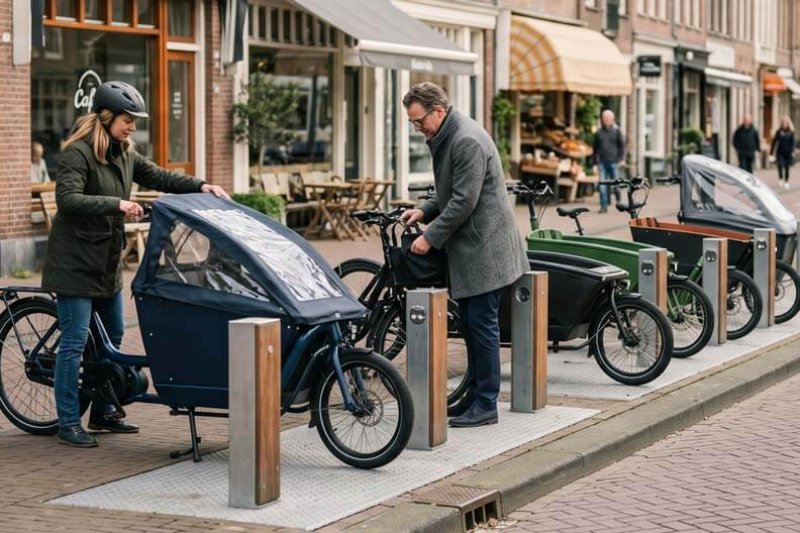
Shared electric cargo bikes parked at a curbside docking station on a European city street, illustrating how electric cargo bike sharing works

Shared & On-Demand Cargo Bikes

Shared electric cargo bikes turn a high-cost vehicle into pay-per-use access. Explore the five sharing models, real programs and what makes a scheme work.

Mobile Vending

Coffee, ice cream and food businesses on three wheels. What sells, what the bike needs, the permits, and the supplier’s opening.

Emerging Trends

Emerging cargo bike uses beyond delivery — marketing bikes, passenger tours, mobile services and more. Real cases, and the supplier openings hiding in each.
cargo bike use case

Why Cargo Bike Use Cases Matter for Business Decisions

For private operators, business owners, and urban project purchasers, cargo bikes are no longer experimental tools. They are long-term investments tied to logistics efficiency, regulatory compliance, and total cost of ownership. Yet many early projects fail for the same reason:


Decisions are made without clearly defining the actual use case.


Without understanding how a cargo bike will be used, it is easy to overspend, under-specify critical components, or choose products that look right on paper but fail in daily operation.


Cargo bikes may appear simple, but compared to standard e-bikes, they involve higher payloads, stricter safety requirements, and more complex component trade-offs. A single article or product spec sheet is rarely enough to explain these realities.

What You Need to Define Before Sourcing or Designing

Before contacting suppliers or comparing platforms, decision-makers should clarify a few core questions.

What problem is the cargo bike solving?

Last-mile delivery, municipal services, family transport, or small business logistics each place very different demands on frame strength, drivetrain, battery capacity, and accessories.

Who will operate it, and how often?

A privately owned family cargo bike and a commercially operated fleet bike may look similar, but their design priorities differ significantly. Commercial use requires durability, serviceability, and predictable downtime — not just outlook.

Which features are essential, and which are optional?

Suspension, motor torque, battery redundancy, weather protection, and cargo box design all impact cost. Not every use case requires the highest-end configuration, but missing critical features can create operational risk.

Understand Cargo Bike Types Before Making Any Choice

Before comparing suppliers or prices, it is critical to understand the different types of cargo bikes available.Front-loading or rear-loading. Two-wheeled, three-wheeled, or even four-wheeled. Longtail, midtail, long john, or trike.Each configuration serves a different purpose and directly affects stability, payload, turning radius, rider skill requirements, and total cost. Choosing the wrong type early often leads to compromises that no component upgrade can fix later. Understand how each cargo bike type fits specific use cases before you commit. 👉 Explore the Types of Cargo Bikes

How to Balance Cost, Risk, and Long-Term Value

One of the most common questions is whether to custom-design a cargo bike or start from an existing platform. (Here find more reliable cargo bike manufacturers and components suppliers)


There is no universal answer — project scale, timeline, and risk tolerance all matter. Custom designs offer differentiation but require longer development cycles and higher upfront investment. Ready-to-use platforms reduce time to market but may involve compromises in payload, compatibility, or future scalability.


Price alone is rarely a reliable indicator of quality. Read more about Cost Breakdown.


Higher cost does not always mean better performance for your specific application. What matters is whether the product configuration matches the real operating environment and expected workload.

Successful cargo bike projects start with clear use case definition, then move to supplier evaluation, cost modeling, and gradual optimization — not the other way around.

Stay Focused on Real-World Use

By understanding how cargo bikes are actually used — across logistics, public services, businesses, and private operators — you reduce risk, control costs, and make better long-term investments. Follow our insights to explore more in depth.

You may also be interested in

cargo bike market trends
Market Trends
family cargo bike user insights
User Insights
Regulations & Policies
cargo bike expos
Expos & Events