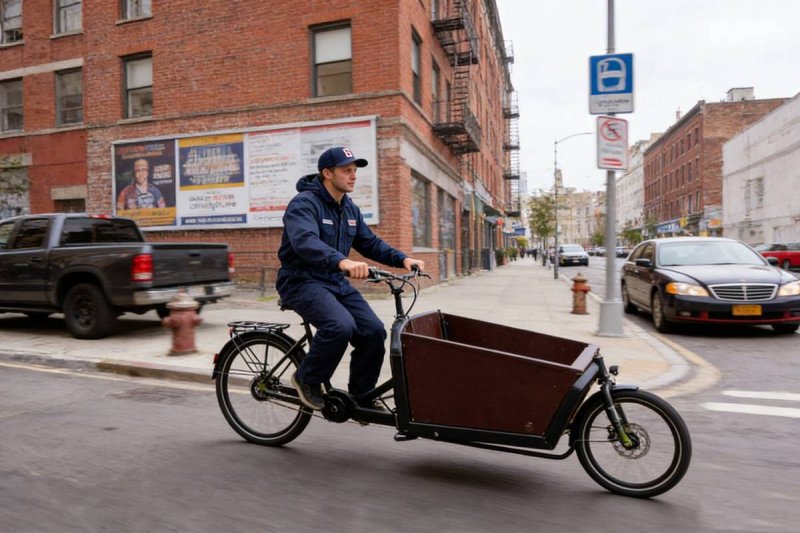
From last-mile delivery to fleet logistics and family transport, let’s explore how cargo bikes are employed across key urban and commercial applications.


For private operators, business owners, and urban project purchasers, cargo bikes are no longer experimental tools. They are long-term investments tied to logistics efficiency, regulatory compliance, and total cost of ownership. Yet many early projects fail for the same reason:
Decisions are made without clearly defining the actual use case.
Without understanding how a cargo bike will be used, it is easy to overspend, under-specify critical components, or choose products that look right on paper but fail in daily operation.
Cargo bikes may appear simple, but compared to standard e-bikes, they involve higher payloads, stricter safety requirements, and more complex component trade-offs. A single article or product spec sheet is rarely enough to explain these realities.
Before contacting suppliers or comparing platforms, decision-makers should clarify a few core questions.
One of the most common questions is whether to custom-design a cargo bike or start from an existing platform. (Here find more reliable cargo bike manufacturers and components suppliers)
There is no universal answer — project scale, timeline, and risk tolerance all matter. Custom designs offer differentiation but require longer development cycles and higher upfront investment. Ready-to-use platforms reduce time to market but may involve compromises in payload, compatibility, or future scalability.
Price alone is rarely a reliable indicator of quality. Read more about Cost Breakdown.
Higher cost does not always mean better performance for your specific application. What matters is whether the product configuration matches the real operating environment and expected workload.
Successful cargo bike projects start with clear use case definition, then move to supplier evaluation, cost modeling, and gradual optimization — not the other way around.

By understanding how cargo bikes are actually used — across logistics, public services, businesses, and private operators — you reduce risk, control costs, and make better long-term investments. Follow our insights to explore more in depth.

CargoBikeHub Research
Independent research on the cargo bike supply chain — manufacturers, certification, and fleet economics.
Every claim on this page traces to a primary source. Found an error? Tell us — we correct within 48 hours.
About our method →
Cargo Bike Hub
Cargo Bike Hub is an open and transparent knowledge platform dedicated to the upstream cargo bike industry—sharing supply chain intelligence, user insights, and market trends to empower better decisions, foster collaboration, and drive sustainable growth across the global cargo bike ecosystem.
©2026. CargoBikeHub. All Rights Reserved.